
Loft Conversions: Costs, Planning & Build Stages
 Project reference · Complete Guide
Everything you need to know before starting a loft conversion in 2026 — indicative UK build costs by conversion type, planning permission and Permitted Development rules, building regulations, a stage-by-stage breakdown of the build, and what can affect value on resale. Written by a specialist loft-design service.
Why homeowners choose Loft Plans
Drawings, structural calculations and planning submissions delivered as one fixed-price package — no hidden extras from us. Council, statutory and building-control fees are separate.
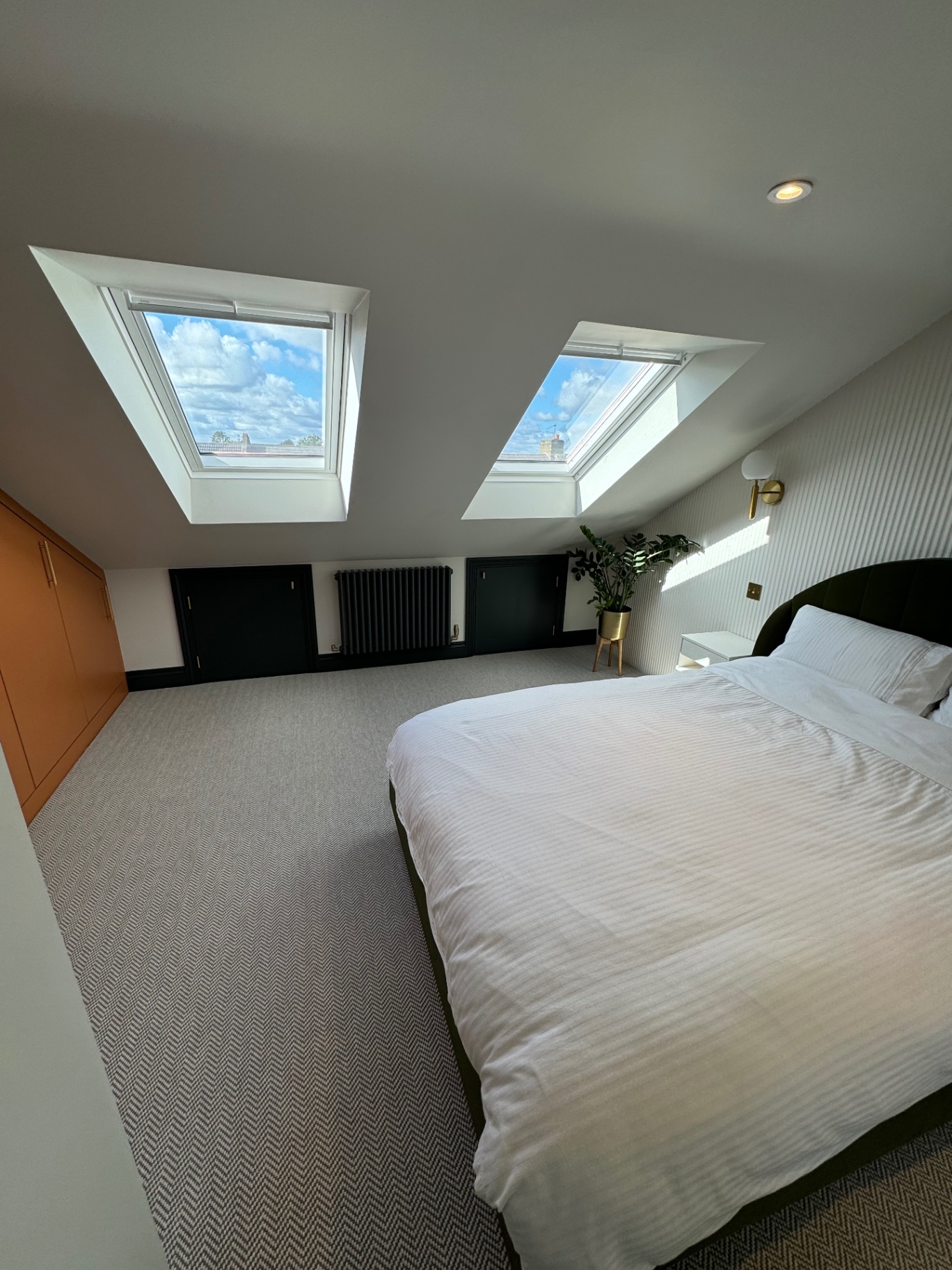
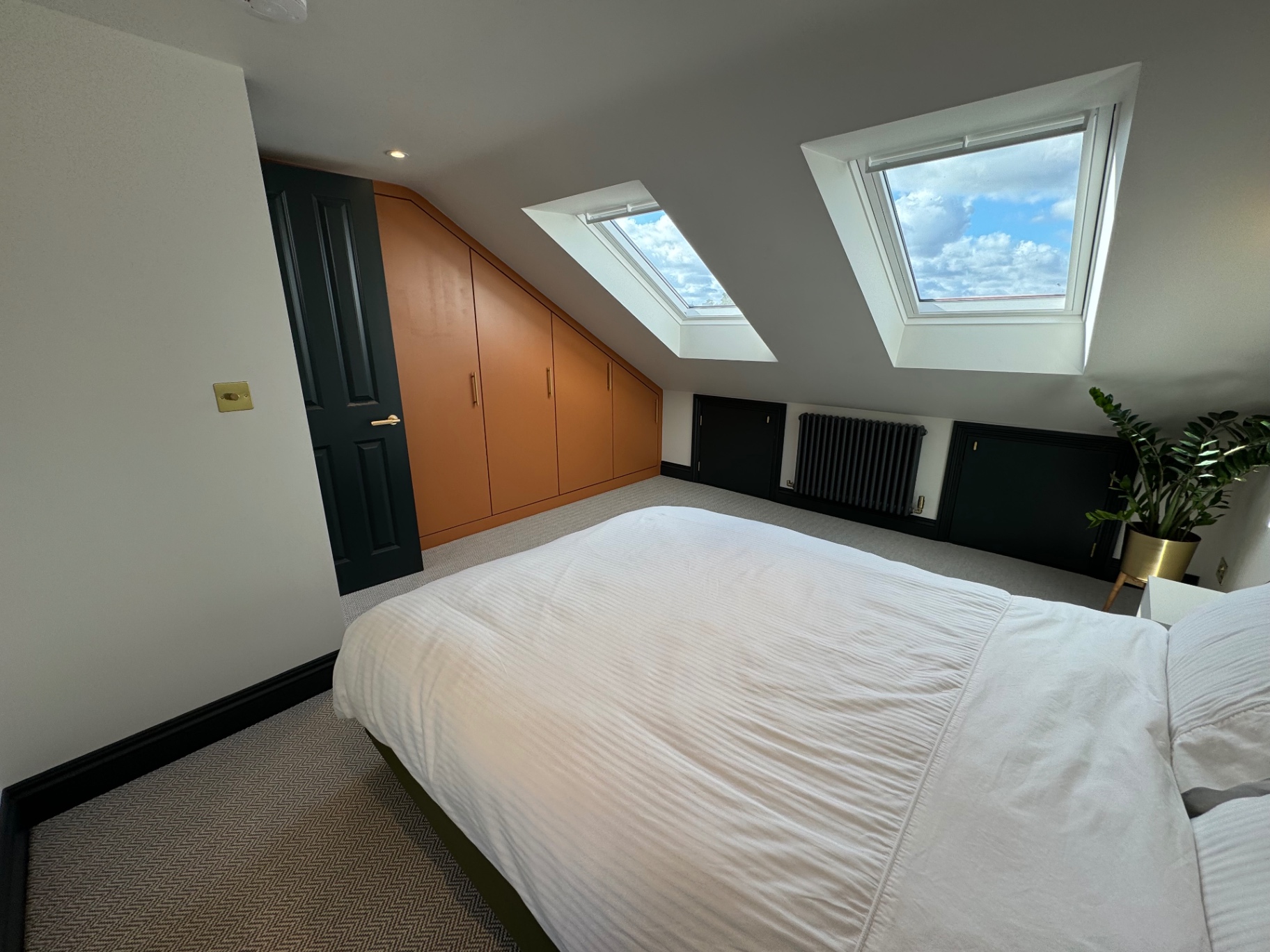
Completed project — what a finished loft looks like
Photos from the completed Buckhurst Hill hip-to-gable and rear-dormer project — a genuine example of the finish a coordinated design can support.
How it works
- 01
Survey
We visit, measure up and confirm which conversion type your roof actually supports.
- 02
Drawings
Planning or LDC drawings and submission are prepared in approximately 1–2 weeks.
- 03
Planning
We submit the LDC or full planning application and handle all council liaison.
How much does a loft conversion cost?
These are indicative starting prices for construction only: • Velux / rooflight loft conversion — from £30,000 • Hip-to-gable — from £35,000 • Hip-to-gable with rear dormer — from £45,000 • Rear dormer — from £40,000 • L-shape dormer — from £50,000 • Double hip-to-gable with dormer — from £55,000 • Mansard — from £70,000 Final construction cost depends on size, specification, structural complexity, access and location. Your appointed builder provides the final build quotation; Loft Plans provides the design, planning and technical package, not the construction.
What drives the cost up or down?
Five factors set the build cost more than anything else. 1. Conversion type — the biggest single driver. A simple Velux is the cheapest, a mansard the dearest, with dormers in the middle. The right type depends on your roof, not your budget. 2. Floor area created — costs scale with the size of the new room. A small dormer over half the rear roof costs less than a full-width one that runs the length of the house. 3. Specification — bathroom suite quality, flooring choice, fitted joinery, glazing specification and heating system all add up. 4. Structural complexity — if your existing floor joists are undersized or your roof has unusual framing, more steels and more strengthening may be needed. 5. Access and location — labour rates, parking, scaffolding and site access can all affect your builder's quotation.
Cost breakdown — where does the money go?
A builder's quotation normally needs to allow for structural work and steels, roof and dormer framing, insulation, plastering, stairs and joinery, electrics, plumbing, windows or rooflights, finishes, scaffolding, waste and overheads. The balance varies significantly with the design and specification. Loft Plans' fees sit outside the build cost. The planning/design stage is £950. For a full-planning case, a further £550 is payable after approval for Building Regulations drawings and structural calculations, making the total coordinated package £1,500. Council, statutory and building-control fees are separate.
Does a loft conversion add value to your home?
A well-designed loft conversion can add useful living space and may increase a home's value, especially where it creates an additional bedroom. The outcome depends on the property, location, design quality, construction quality and local market. We do not promise a percentage uplift or financial return; obtain local valuation advice for your home.
Planning permission — when do you need it?
Many house loft conversions in England don't need a full planning application because they can fall under Permitted Development — provided all the relevant limits and conditions are met and the rights haven't been removed. The main limits include: • Volume limits — 40 m³ added for terraces, 50 m³ for semi-detached and detached homes (the total includes any earlier extensions) • No extension beyond the front elevation • No dormer higher than the existing ridge line • Materials similar to the existing roof • Side-facing windows obscure-glazed • Roof terraces, balconies and raised platforms are not allowed under Permitted Development If you stay within those rules, you don't need planning permission — but you should still apply for a Lawful Development Certificate (LDC) from the council. In England the statutory fee for a proposed certificate is generally half the equivalent full planning application fee, with any applicable online service charge separate; current fees are confirmed before you submit. The certificate provides formal evidence from the local planning authority that the proposed work would be lawful based on the information submitted, and is often useful when selling or remortgaging. You WILL need a full planning application if your home is a flat, a listed building, in a conservation area, a National Landscape, or has had Permitted Development rights removed by an Article 4 direction. A dormer or other enlargement on the principal-elevation roof slope fronting a highway cannot be carried out under Class B Permitted Development and will normally require a planning application; rooflights on that slope may still fall under Class C if their conditions are met.
Loft conversion costs by type
| Conversion type | Starting build cost | Construction timing | Planning |
|---|---|---|---|
| Velux (rooflight) | From £30,000 | Set by your builder | Often Permitted Development |
| Hip-to-gable | From £35,000 | Set by your builder | Often Permitted Development |
| Hip-to-gable + rear dormer | From £45,000 | Set by your builder | Often Permitted Development |
| Rear dormer | From £40,000 | Set by your builder | Often Permitted Development |
| L-shape dormer | From £50,000 | Set by your builder | Route checked per property |
| Double hip-to-gable + dormer | From £55,000 | Set by your builder | Route checked per property |
| Mansard | From £70,000 | Set by your builder | Usually full planning |
Indicative build starting prices only. Final construction cost depends on size, specification, structural complexity, access and location; your appointed builder provides the quotation and programme.
Not sure which conversion suits your loft?
We’ll assess the roof and explain what the space can realistically deliver.
Building regulations — non-negotiable
Every loft conversion in the UK needs building regulations approval, regardless of whether planning permission is required. This is a separate process to planning and is what makes the conversion legally a habitable room rather than just a loft. Without it the conversion can't be sold as bedroom space and your home insurance may not cover it. Building regulations cover six main areas: • Structural stability — new joists, steel beams and reinforced roof framing, with structural calculations prepared by a structural engineer • Fire safety — protected staircase enclosure, fire-rated doors on every habitable room on every storey below, mains-wired interlinked smoke alarms throughout • Means of escape — a clear protected route from the loft to the front door, and openable escape windows where the protected route can't be guaranteed • Thermal insulation — full insulation to current Part L energy efficiency standards in the roof, walls and floor • Stairs — minimum 2m head height (1.9m at the centre line of a fixed stair is acceptable under Part K), maximum 42° pitch • Ventilation — trickle vents on windows, mechanical extract in bathrooms and en-suites We prepare all building regulations drawings and structural calculations as part of the package. Your builder calls building control inspections at the key stages and they sign each one off in turn.
The build stages — what actually happens on site
After the design and approvals are in place, your appointed builder plans and carries out the construction. A typical sequence includes scaffolding and temporary protection, structural steels and floor joists, roof or dormer framing, first-fix services, staircase installation, insulation and plastering, second-fix work and finishes. Building control reviews the submitted technical information and carries out inspections during construction. The builder controls the construction programme, site sequencing and completion date; these are not part of Loft Plans' preparation timescale.
How the design and application timetable works
Permitted Development / LDC route: 1. Survey and measure-up arranged. 2. Planning/LDC drawings and submission prepared in approximately 1–2 weeks. 3. Where the scope is suitable, Building Regulations drawings and structural calculations are prepared within that same 1–2 week design period. 4. Council and building-control review times sit outside Loft Plans' preparation period. 5. You appoint your builder for construction. Full planning route: 1. Survey and measure-up arranged. 2. Planning drawings and application prepared in approximately 1–2 weeks. 3. The standard statutory determination period for a typical householder planning application is usually 8 weeks, although councils can take longer. 4. Once approved, we finalise the Building Regulations drawings and structural calculations within a further few working days. 5. You appoint your builder for construction.
What our package covers
We design and submit loft conversions across Essex, London and Hertfordshire. The planning/design stage is £950. On full-planning projects, a further £550 is payable after approval for Building Regulations drawings and structural calculations, making the total coordinated package £1,500. Council, statutory and building-control fees are separate. For suitable Permitted Development projects, the coordinated technical package can be prepared within the same 1–2 week design period. We do not undertake the building work; you appoint your own builder.
Areas we cover
We design and submit loft conversions across Essex, London and Hertfordshire — including:
Frequently asked questions
01How much does a loft conversion cost?
Indicative build starting prices are: Velux or rooflight from £30,000; hip-to-gable from £35,000; hip-to-gable with rear dormer from £45,000; rear dormer from £40,000; L-shape dormer from £50,000; double hip-to-gable with dormer from £55,000; and mansard from £70,000. Final construction cost depends on size, specification, structural complexity, access and location. Loft Plans does not carry out the build. Our planning/design stage starts from £950; for full-planning cases the technical stage is a further £550 after approval, making the coordinated package £1,500. Council and statutory fees are separate.
02What's included in the build cost?
Structural work (steels, joists, dormer framing), insulation to current Part L, plasterboard and skim, electrics, plumbing, central heating extension, staircase, flooring, internal doors, windows or roof lights, decoration and basic fittings. It does not normally include bathroom suites, fitted wardrobes, expensive flooring upgrades, or external scaffolding licences if your local authority charges for them.
03Can a loft conversion add value?
A well-designed additional bedroom can add value, but the result depends on the property, location, quality and local market. Obtain local valuation advice rather than relying on a generic percentage or guaranteed return.
04Do I need planning permission?
Most loft conversions in England don't — they fall under Permitted Development if they stay within 40 m³ for terraces or 50 m³ for semis and detached homes, don't extend forward of the front roof, and don't go above the existing ridge. Flats and listed buildings do not benefit from the same householder loft Permitted Development route and need separate planning and consent checks. Conservation areas and National Landscapes have tighter Permitted Development restrictions, and an Article 4 direction can remove specific Permitted Development rights — so the right route should always be checked for your specific property before submission. Where Permitted Development applies, a Lawful Development Certificate is recommended to provide formal evidence from the local planning authority that the work would be lawful based on the information submitted.
05How long does Loft Plans take to prepare the drawings?
After the survey, we prepare the planning or LDC drawings and submission in approximately 1–2 weeks. For a suitable Permitted Development project, Building Regulations drawings and structural calculations can be prepared within that same design period. For a full-planning case, the standard statutory determination period for a typical householder application is usually 8 weeks, although councils can take longer; after approval we finalise the technical package within a further few working days. Council, building-control and construction times sit outside our preparation period.
06Do I need a structural engineer?
Yes — every loft conversion needs structural calculations prepared by a structural engineer covering new floor joists, supporting steel beams, and any changes to the roof framing. Our package includes the engineer's calculations, ready for building-control review, and we answer any queries they raise if needed.
07Will I need a party wall agreement?
If your home is semi-detached or terraced, you may need to serve notice before work affects a shared wall, including where steel beams bear into it. This is handled separately from Loft Plans' design service; obtain advice and a quote from a party wall surveyor for your property.
08Can I stay in the house during the build?
Most clients do. The first couple of weeks are noisy and dusty when the roof is opened and the steels are dropped in, but once the loft is weather-tight the noise drops sharply. Expect one or two days without water or power when the heating and electrics are extended. Bathroom-only days at the end are usually fine to live through.
Explore other conversion types
The most popular conversion type — full standing head height, mid-range cost.
Maximum-space conversion for Victorian and Edwardian terraces with a back addition.
The simplest and cheapest route — no dormer needed.
Deep dive on Permitted Development, LDCs and when you need full planning.
Ready to plan your loft conversion?
Tell us about the property and receive a clear, fixed-price scope for the design stage.