L-Shape Dormer Loft Conversion Plans & Drawings
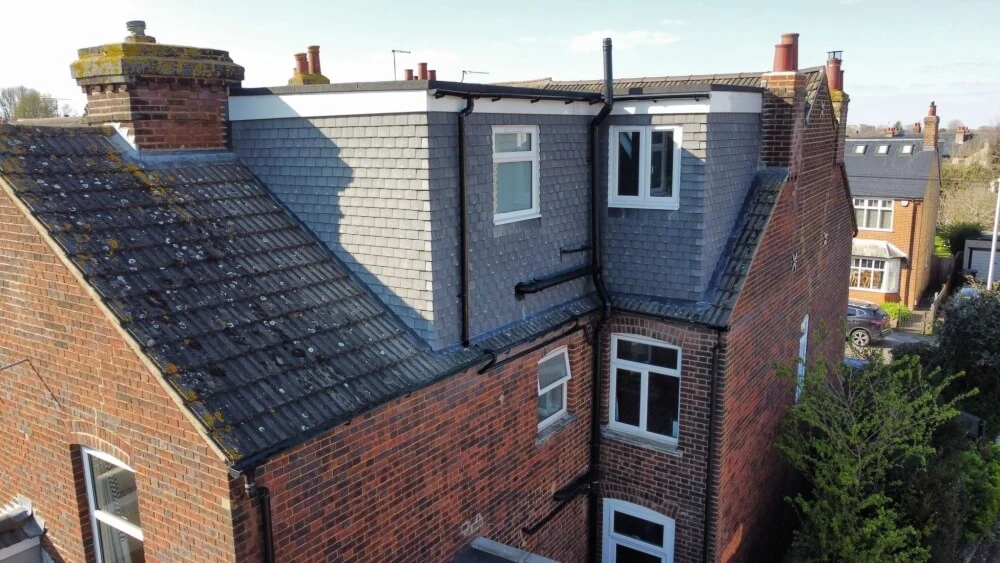 Completed L-shape project · Hitchin
An L-shape dormer is the maximum-space loft conversion for Victorian and Edwardian terraces with a rear addition. Two connected dormers — one over the main roof, one over the back addition — combine to deliver a full master suite plus a second room. We design L-shape dormers across Essex, London and Hertfordshire.
Why homeowners choose Loft Plans
Drawings, structural calculations and planning submissions delivered as one fixed-price package — no hidden extras from us. Council, statutory and building-control fees are separate.
Recent L-shape dormer project
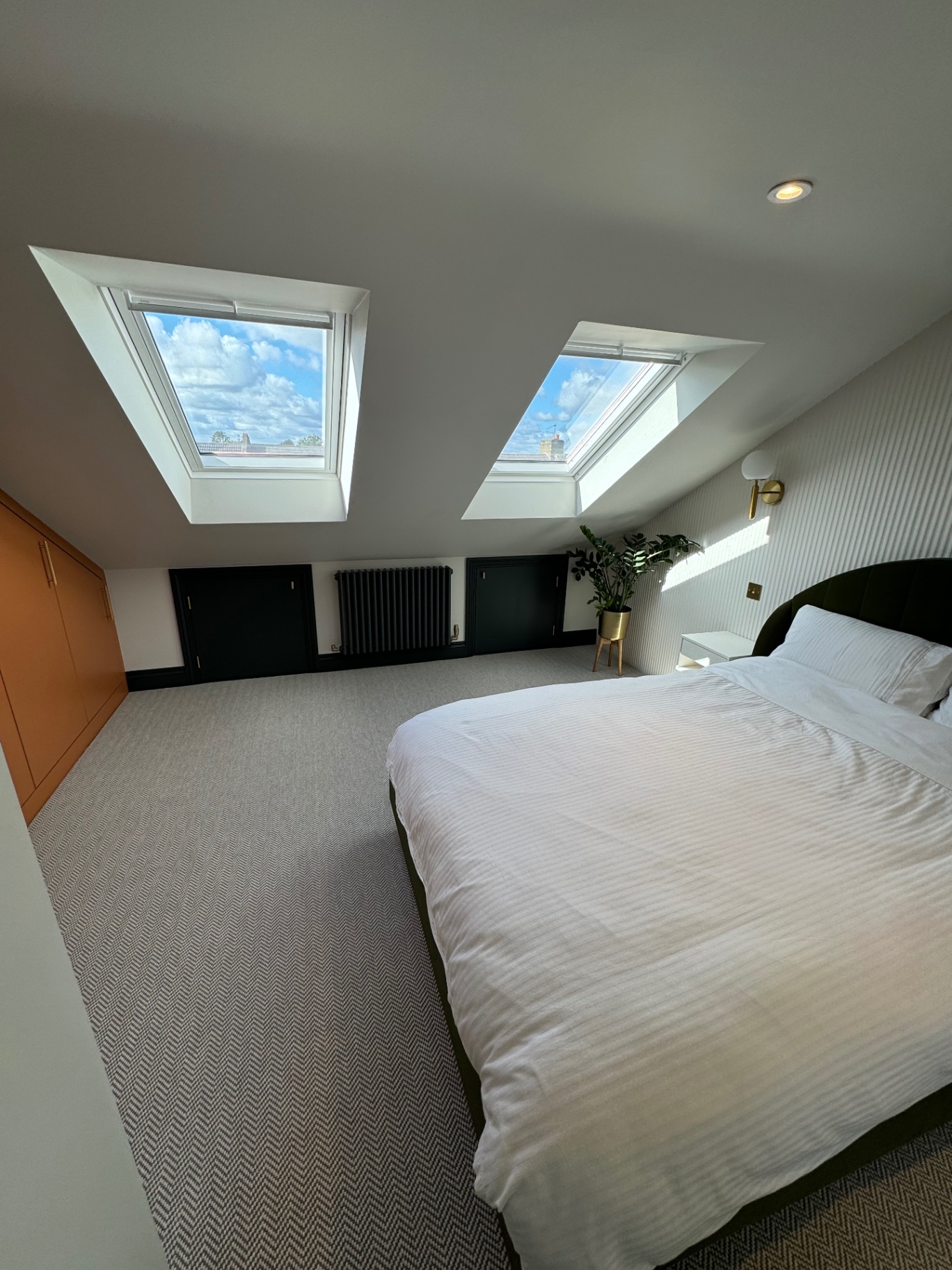
Interior details from a completed Loft Plans project, showing a master suite with en-suite, a separate WC, a home office and a new staircase with skylight above. These photographs illustrate finishes and space planning; the verified Hitchin L-shape exterior is shown above.
How it works
- 01
Survey
We visit, measure up and confirm an L-shape is the right call for your roof and addition.
- 02
Drawings
Drawings and submission are prepared in approximately 1–2 weeks; suitable Permitted Development technical work can be prepared in the same period.
- 03
Planning
We submit the Lawful Development Certificate or planning application and handle council liaison.
What is an L-shape dormer loft conversion?
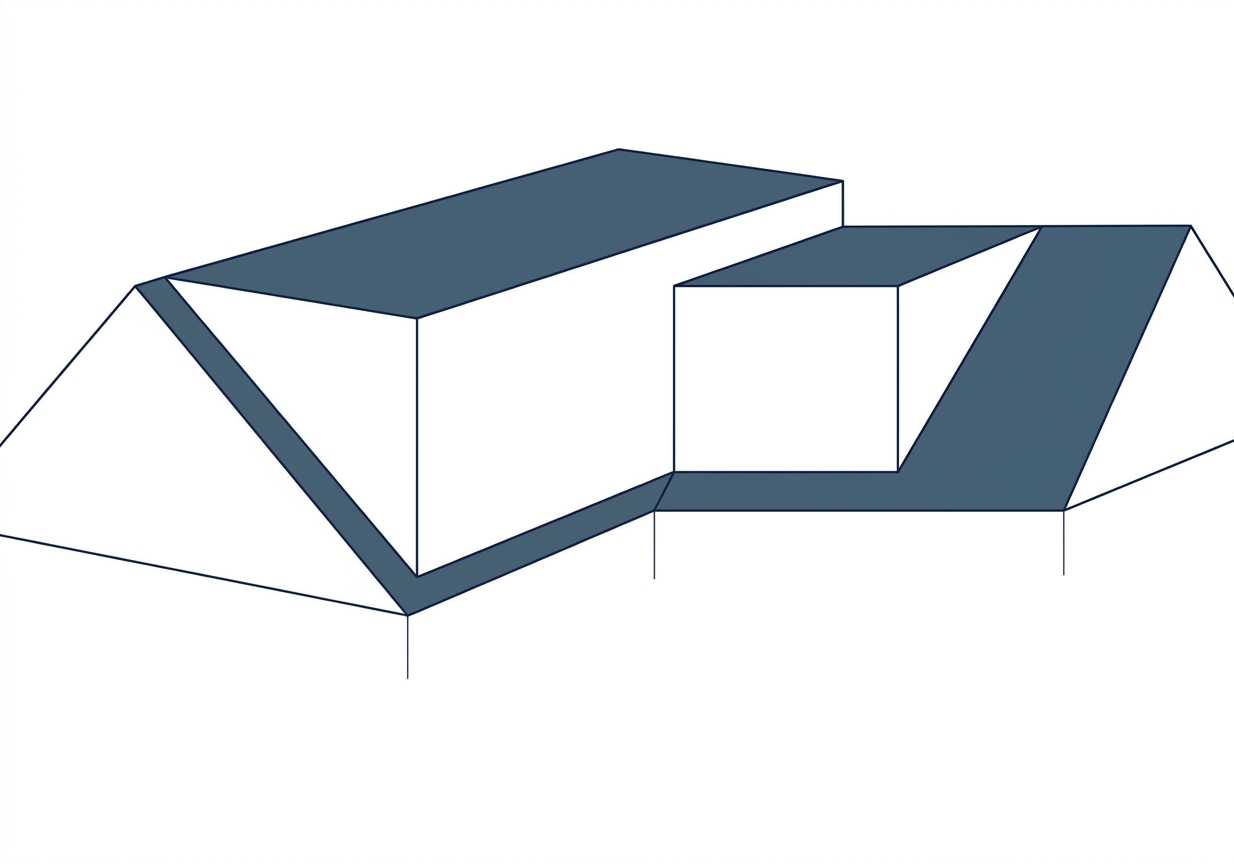
An L-shape dormer is two box dormers joined in an 'L' shape. One dormer extends from the main rear roof; the second extends from the roof over your back addition — the two-storey outrigger that usually contains the kitchen below. It's a design that's specific to Victorian and Edwardian housing stock. These properties were almost always built with a rear addition (the 'tail' of the L on plan), and the L-shape dormer is the only conversion type that uses both roof slopes at once. The two dormers meet to form a single open loft floor with full standing head height throughout the new rooms. It's the most space-efficient loft conversion type available for terraced houses and is the reason so many London and Essex Victorian terraces end up with a true master suite plus a second bedroom or office upstairs.
Which properties suit an L-shape dormer?
L-shape dormers are designed almost exclusively for Victorian and Edwardian properties with a two-storey rear addition. The vast majority are terraced houses — long rows of narrow-fronted homes with a kitchen and bathroom built off the back at ground and first floor level. That distinctive 'L' footprint on plan is what makes the conversion possible. Some semi-detached and end-of-terrace Victorian/Edwardian homes also have the same rear addition and convert just as well — and they benefit from a more generous Permitted Development volume allowance (50 m³ instead of 40 m³, see below). If your house was built between roughly 1850 and 1915, has bay windows at the front and a long narrow garden, and the kitchen sits in a two-storey extension at the back, you're almost certainly a candidate. We confirm the roof structure and head height on the survey.
Why choose an L-shape dormer?
More usable floor area than any other conversion type — typically enough for a double bedroom with en-suite plus a second room (children's bedroom, home office, dressing room or studio). Full standing head height across both dormers, so no wasted space under sloped ceilings. Large windows on both dormers flood the loft with natural light. Significant value uplift — adding a true extra bedroom plus bathroom is the single highest-return home improvement on most terraced houses. Layout flexibility — the L-shape lets you separate sleeping, bathing and working zones in a way a standard dormer can't.
Ideas for your L-shape dormer
Master suite with en-suite and dressing area — the most common brief, and what most of our L-shape projects deliver. Two proper bedrooms — one across the main roof, one in the outrigger dormer, with a shared loft shower room. Master bedroom plus home office — keep work and sleep in separate zones with a door between them. Guest suite with kitchenette — for households that need an occasional self-contained space. Large family bathroom plus single bedroom — when the priority is a luxurious bathroom upstairs. We'll talk through the layout options on the survey based on your roof, your staircase position and what you want the space to do.
L-shape dormer vs other conversion types
| Conversion type | Starting build cost | Construction timing | Planning |
|---|---|---|---|
| Velux (rooflight) | From £30,000 | Set by your builder | Often Permitted Development |
| Rear dormer | From £40,000 | Set by your builder | Often Permitted Development |
| Hip-to-gable | From £35,000 | Set by your builder | Often Permitted Development |
| L-shape dormer | From £50,000 | Set by your builder | Route checked per property |
Indicative build starting prices only. Final construction cost depends on size, specification, structural complexity, access and location; your appointed builder provides the quotation and programme.
Not sure which conversion suits your loft?
We’ll assess the roof and explain what the space can realistically deliver.
Permitted Development rules for L-shape dormers
Most L-shape dormers are built under Permitted Development (PD) rather than full planning permission. PD is a national right granted by parliament that allows certain loft extensions without a planning application — provided the design stays inside a set of strict volume and design limits. The key thing to understand is that the PD volume allowance measures new volume added outside the original roof line — the new boxy mass of the dormers that sticks up and out above the existing roof slope. The original roof volume doesn't count; only what you're adding. The allowances are:
- 40 m³ total added volume for terraced houses (including mid-terrace and end-of-terrace)
- 50 m³ total added volume for semi-detached and detached houses
- Allowance is cumulative — any previous roof extensions count against it
- Dormer must not be higher than the existing ridge line
- Dormer must be set back at least 200 mm from the original eaves on the rear roof slope
- No dormer or alteration is allowed on the principal (front) elevation
- Materials must be similar in appearance to the existing house
- Side-facing windows must be obscure-glazed and non-opening below 1.7 m
- No raised platforms, balconies or verandas
- PD rights don't apply in conservation areas, on listed buildings, or where the council has removed them by Article 4 direction
Planning permission when PD doesn't apply
If your home is in a conservation area, is listed, has had PD rights removed (common on newer developments), or the design exceeds the volume allowance, a full householder planning application will be needed instead. We handle either route — Lawful Development Certificate (for PD schemes) or full planning — as part of the fixed-price package, so you don't have to work out which one applies before getting in touch.
Building regulations
Regardless of the planning route, every L-shape dormer must comply with building regulations. Our drawings cover the lot: Structural stability — new floor joists, steel beams where needed, and reinforced roof framing, all designed by a structural engineer. Fire safety — protected staircase enclosure, fire-rated doors at every level, and mains-wired interlinked smoke alarms. Thermal insulation — full insulation spec to current Part L energy efficiency standards. Staircase — designed to meet Part K head height and pitch requirements and dropped into the most practical position on your existing first floor. Ventilation — mechanical extract for en-suites and trickle vents on windows. Your builder calls building control inspections at the key stages; our drawings give them everything they need to sign each one off.
What's included in our L-shape dormer package
Initial planning drawings showing the proposed L-shape layout, dormer profiles, window positions and staircase. Building regulations drawings covering insulation, fire safety, ventilation and structural elements. Structural calculations prepared by a structural engineer for building-control review. Lawful Development Certificate or full planning application — whichever your council requires. Full liaison with your local authority until decision. One fixed price, no hidden extras from us — council, statutory and building-control fees are separate.
Areas we cover
We deliver L-shape dormer drawings, structural calculations and planning applications across Essex, London and Hertfordshire — including:
Frequently asked questions
01What is an L-shape dormer loft conversion?
An L-shape dormer is two connected box dormers built in an 'L' — one on the main rear roof and a second over the back addition (the outrigger or kitchen extension below). The two dormers join to create a single, very generous loft floor — typically large enough for a double bedroom with en-suite plus a second room.
02Which houses suit an L-shape dormer?
L-shape dormers are designed for Victorian and Edwardian terraces, and many post-war semis, that have a two-storey rear addition (often containing the kitchen below and a bedroom above). If your house has that classic 'L' footprint at the back, you're a strong candidate.
03Do I need planning permission for an L-shape dormer?
Often no — L-shape dormers on the rear roof slope can fall under Permitted Development if the combined added volume stays within 40 m³ for terraces or 50 m³ for semis and detached homes, and the dormer doesn't sit higher than the existing ridge or extend forward of the front roof plane. Conservation areas, listed buildings, and homes with removed Permitted Development rights will need a full application. We confirm on the survey.
04How much head height do I need?
You generally need at least 2.2–2.3m from the existing ceiling joist to the ridge on the main roof. The dormer itself creates the head height inside — but you need enough starting height across the loft for the staircase, landing and the room behind the dormer to be usable.
05How much does an L-shape dormer loft conversion cost?
The build starts from £50,000. Final construction cost depends on size, specification, structural complexity, access and location. Loft Plans does not carry out construction. Our planning/design stage is £950 and, on full-planning cases, the post-approval technical stage is £550, making £1,500 in total.
06How long does an L-shape dormer take to build?
After the survey, drawings and the relevant submission are prepared in approximately 1–2 weeks. Council, building-control and construction times are separate.
Explore other conversion types
The technical drawings building control need before work starts.
Engineer-designed beams and joists for your conversion.
When a single rear dormer is the right fit instead of a full L-shape.
The simplest, cheapest conversion type — no dormer needed.
When you need a full application vs Permitted Development.
Ready to plan your loft conversion?
Tell us about the property and receive a clear, fixed-price scope for the design stage.