Velux Loft Conversion Plans & Drawings
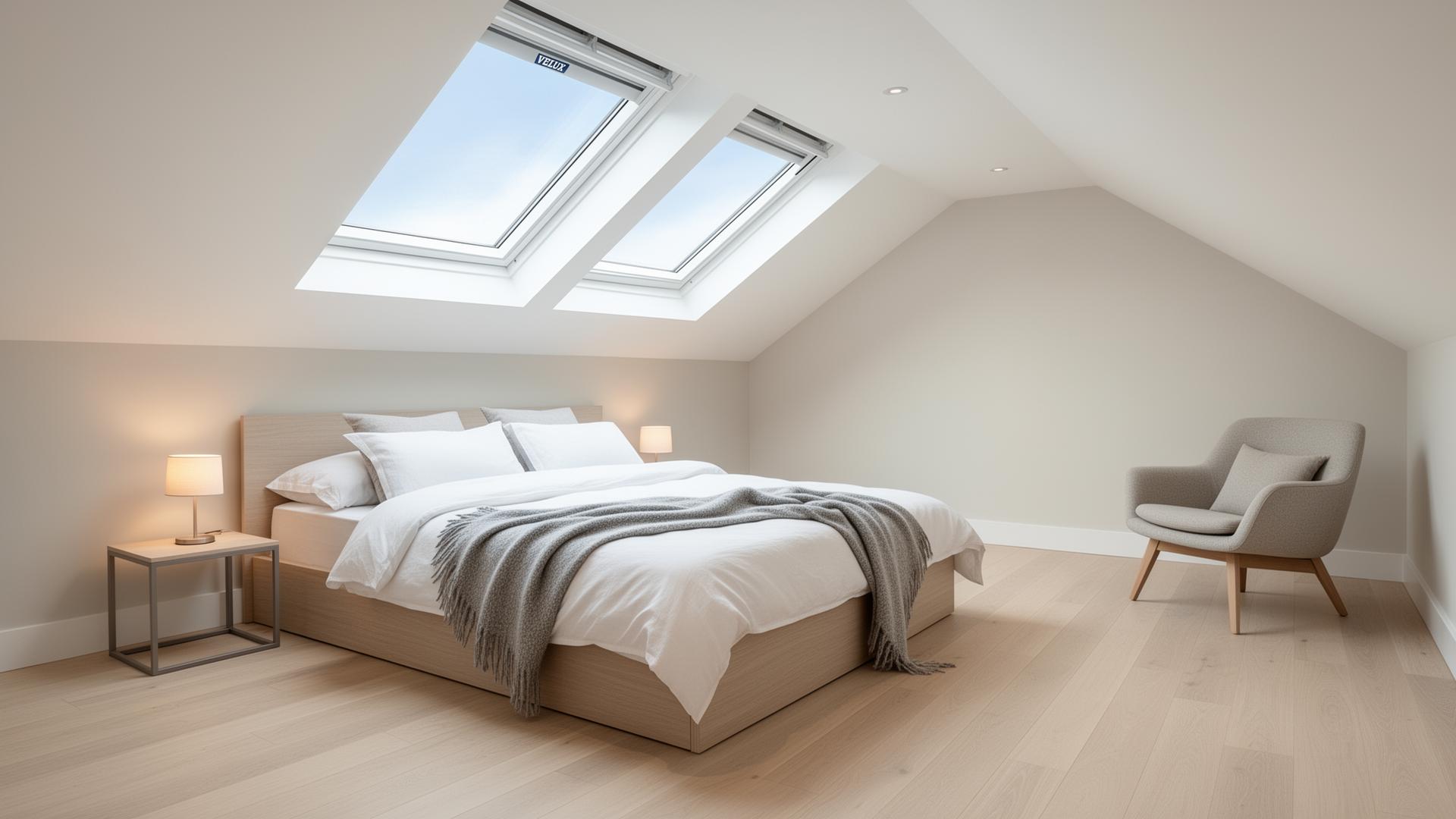 Project reference · Velux Loft Conversions
A Velux conversion is the simplest, fastest and most affordable way to turn a loft into a usable room. The existing roof stays exactly as it is — we simply add Velux roof windows and design the interior to make the space habitable. We deliver Velux conversion drawings and planning across Essex, London and Hertfordshire.
Why homeowners choose Loft Plans
Drawings, structural calculations and planning submissions delivered as one fixed-price package — no hidden extras from us. Council, statutory and building-control fees are separate.
Recent projects
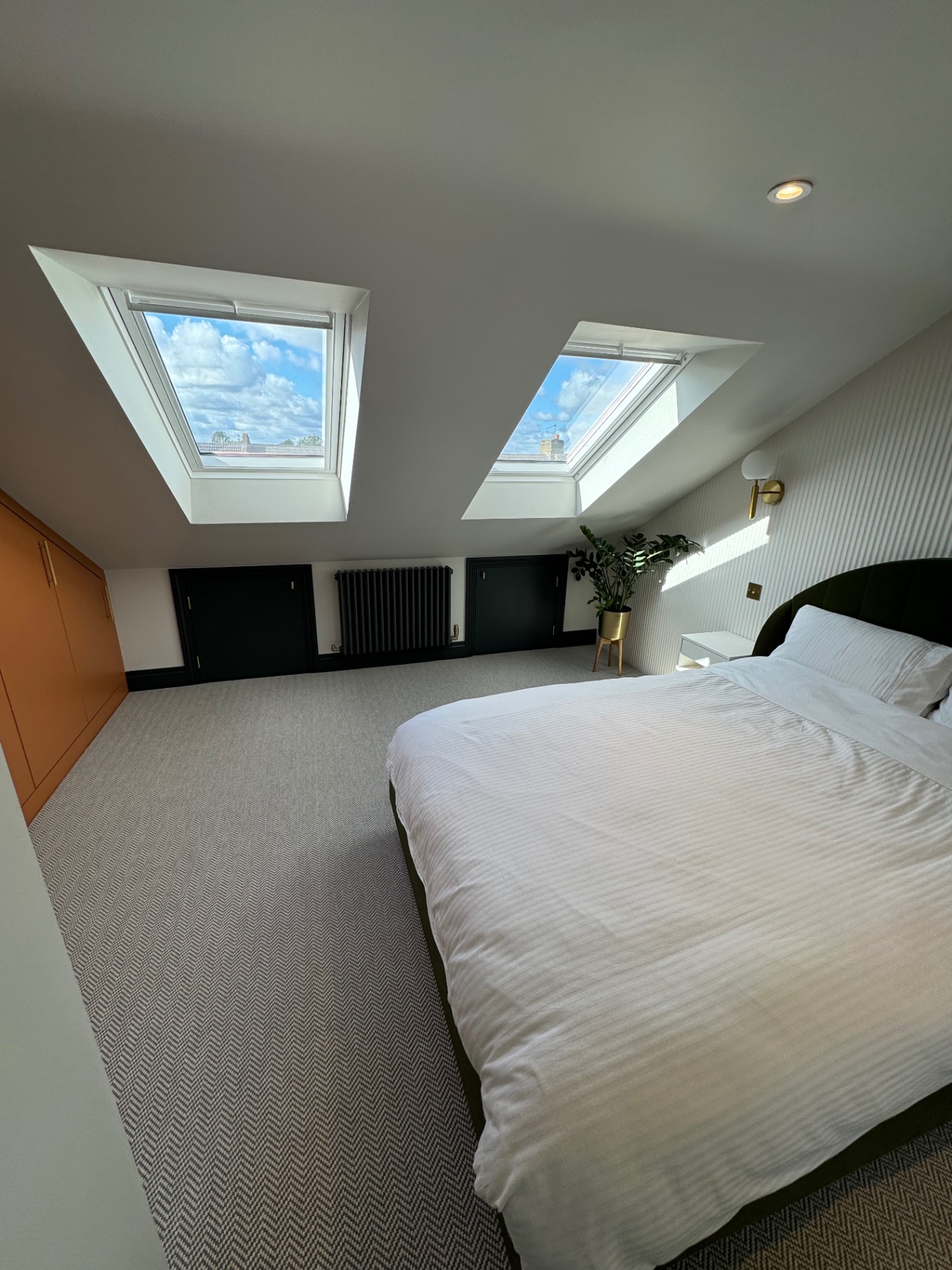
Details from a completed Buckhurst Hill project showing how rooflights bring natural light into bedrooms, circulation and eaves spaces.
How it works
- 01
Get in touch
Our surveyor visits your property to take detailed measurements and assess the conversion potential.
- 02
Draft Drawings
We prepare the drawings and submission in approximately 1–2 weeks after the survey.
- 03
Planning Submission
We manage planning and building control applications, handling all queries with local authorities.
- 04
3D Visualisation (Optional)
Step into your loft design with our immersive 3D Virtual Tours — ideal if you want to visualise the space before fully confirming your layouts.
- 05
Structural Calcs & Building Regs
For suitable Permitted Development projects the technical package can be prepared in the same design period; after full-planning approval it is finalised within a further few working days.
- 06
Move to Construction
Once approved, your plans are ready for your builder to start the project.
Why choose a Velux loft conversion?
A Velux conversion keeps your existing roof line completely intact — no dormers, no hip-to-gable alterations, no scaffolding-heavy external works. We strengthen the floor, insulate the roof, add a staircase and fit Velux roof windows to bring natural light into the space. Because nothing extends beyond the existing roof profile, Velux conversions almost always qualify for Permitted Development, which means no full planning application. They're the cheapest and quickest loft conversion type — and for homes with enough existing head height, they're often the smartest choice.
When is a Velux conversion the right option?
Velux conversions work best when your loft already has good head height (at least 2.8m from joist to ridge — once the floor is built up and the roof insulated, the finished space ends up considerably smaller) and you don't need to maximise every inch of floor area. Typical use cases include: A spare bedroom or guest room where the sloped ceiling isn't a problem. A home office, studio or hobby room. A playroom or teenager's hangout. Properties in conservation areas where dormers aren't permitted. Homes where the owner wants to keep external disruption to an absolute minimum. If your loft is on the short side or you need a full-height double bedroom plus en-suite, a dormer conversion will usually deliver better results.
Velux vs dormer at a glance
| Conversion type | Starting build cost | Construction timing | Planning |
|---|---|---|---|
| Velux (rooflight) | From £30,000 | Set by your builder | Often Permitted Development |
| Rear dormer | From £40,000 | Set by your builder | Often Permitted Development |
| Hip-to-gable | From £35,000 | Set by your builder | Often Permitted Development |
| L-shape dormer | From £50,000 | Set by your builder | Route checked per property |
Indicative build starting prices only. Final construction cost depends on size, specification, structural complexity, access and location; your appointed builder provides the quotation and programme.
Not sure which conversion suits your loft?
We’ll assess the roof and explain what the space can realistically deliver.
Choose the scope your rooflight conversion needs
The planning/design stage is £950. On full-planning cases, a further £550 is payable after approval for Building Regulations drawings and structural calculations, making the coordinated package £1,500. Council, statutory and building-control fees are separate.
Velux vs dormer — which is right for you?
Velux conversions are cheaper, faster and less disruptive — but they don't add any floor area or head height. Dormers cost more and take longer, but typically deliver enough usable space for a double bedroom plus shower room. If you have generous head height and just want a comfortable extra room, Velux is hard to beat. If you need to maximise every square metre, go dormer. We'll advise honestly on the survey based on what your roof can actually deliver.
Areas we cover
We deliver Velux loft conversion drawings, structural calculations and planning applications across Essex, London and Hertfordshire — including:
Frequently asked questions
01What is a Velux loft conversion?
A Velux (or rooflight) conversion is the simplest type of loft conversion. The existing roof structure stays exactly as it is — no dormers, no extensions — and Velux roof windows are fitted flush into the roof slope to bring light into the new room. It's the cheapest, quickest and least disruptive way to convert a loft.
02Do I need planning permission for a Velux loft conversion?
In most cases, no. Because nothing extends beyond the existing roofline, a Velux conversion almost always falls under Permitted Development. The exceptions are conservation areas, listed buildings, and homes where Permitted Development rights have been removed. We'll confirm on the survey.
03How much head height do I need for a Velux conversion?
You need at least 2.8m from the existing ceiling joists to the underside of the ridge. Once the floor is built up and the roof is insulated, the finished head height drops significantly — so the raw loft has to start tall enough to leave a usable room behind. If you're short on head height, a dormer is usually the better option.
04How long does a Velux loft conversion take to build?
After the survey, Loft Plans prepares the drawings and LDC submission in approximately 1–2 weeks. Where suitable, the technical package can be prepared in that same design period. External review and construction times are separate.
05How much does a Velux loft conversion cost?
A Velux or rooflight conversion has an indicative build starting price of £30,000. Final construction cost depends on size, specification, structural complexity, access and location. Loft Plans does not carry out the build; your appointed builder provides the quotation. Our planning/design stage is £950 and, on full-planning cases, the post-approval technical stage is £550, making the coordinated package £1,500. Council and statutory fees are separate.
06Can I have a bedroom or bathroom in a Velux conversion?
Yes — provided you have the head height. Velux conversions work brilliantly as bedrooms, home offices or playrooms. Bathrooms are possible but the sloped ceiling limits where you can position a shower, so layout planning matters.
Explore other conversion types
The technical drawings building control need before work starts.
Engineer-designed beams and joists for your conversion.
Add real floor area and head height — the UK's most popular loft conversion type.
When you need a full application vs Permitted Development.
Ready to plan your loft conversion?
Tell us about the property and receive a clear, fixed-price scope for the design stage.