Dormer Loft Conversion Plans & Drawings
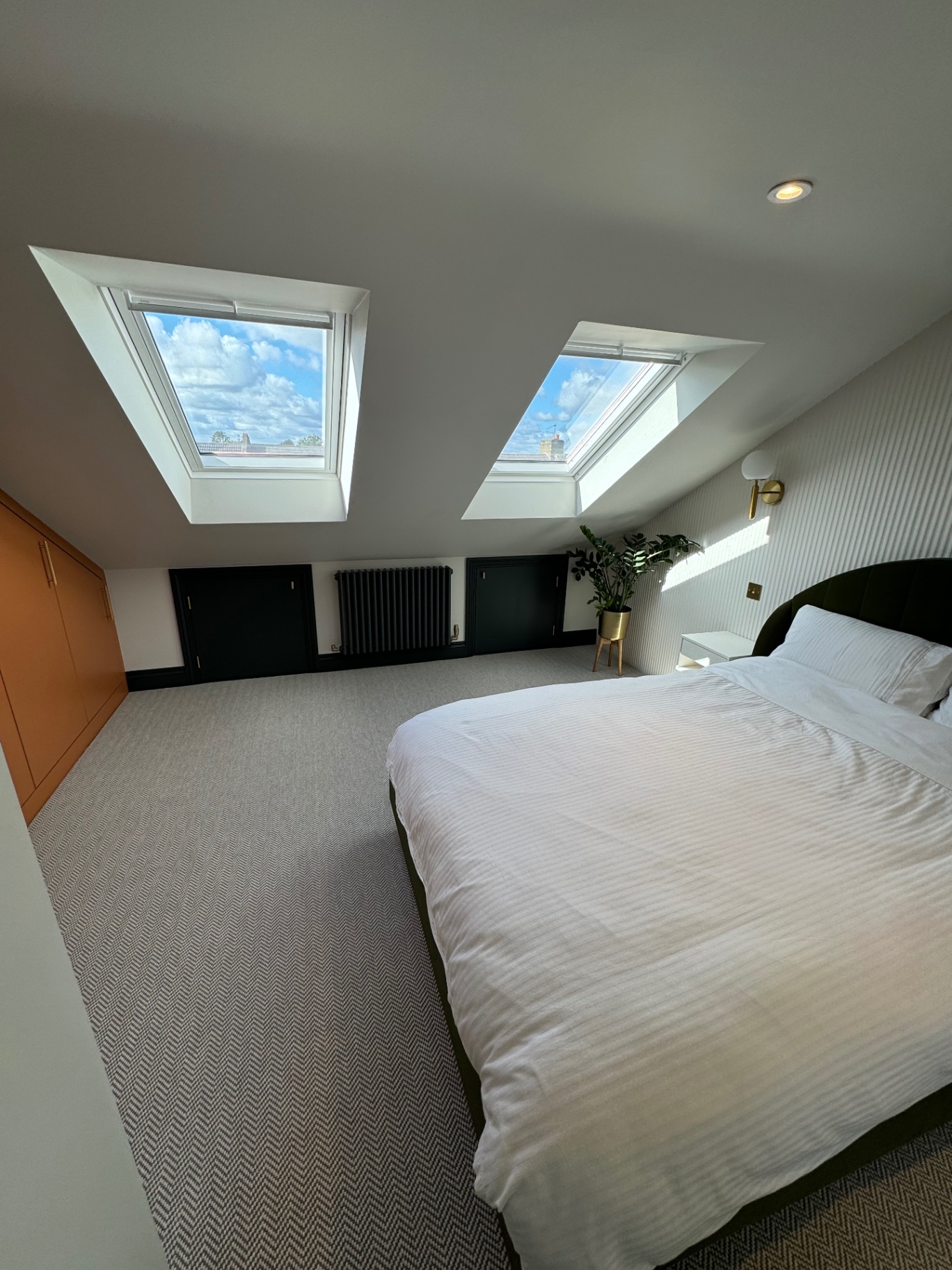 Completed rear-dormer project · Buckhurst Hill
The dormer is the UK's most popular loft conversion — and for good reason. It adds head height, maximises usable floor area, and is often eligible under Permitted Development. We design dormer conversions across Essex, London and Hertfordshire.
Why choose a dormer loft conversion?
A dormer extends part of your existing roof outward and upward, creating a box with vertical walls and a flat or pitched roof. The result is significantly more usable floor area than a Velux conversion — typically enough for a double bedroom plus a shower room. Rear dormers usually qualify for Permitted Development, meaning no full planning application is needed.
Dormer designs we deliver
Standard flat-roof dormers — the most space-efficient option, ideal for rear elevations. Pitched-roof dormers — more attractive and often required in conservation areas. L-shape dormers — for Victorian and Edwardian terraces with a back addition, delivering two rooms. Full-width dormers — covering most of the rear roof slope for maximum head height. We assess your roof on the survey and recommend the design that delivers the most space while meeting planning rules.
Not sure which conversion suits your loft?
We’ll assess the roof and explain what the space can realistically deliver.
Choose the scope your dormer needs
Planning drawings start from £950 and cover the survey, proposed dormer design and relevant planning or Lawful Development Certificate submission. The full coordinated package starts from £1,500 and adds Building Regulations drawings and structural calculations. Council and building-control fees are separate; the exact scope and fixed quote are agreed before work starts.
Frequently asked questions
01What is a dormer loft conversion?
A dormer loft conversion extends part of the existing roof vertically to create extra head height and floor space. It's the most popular type of loft conversion in the UK because it maximises usable space without dramatically changing the roof profile.
02Do I need planning permission for a dormer loft conversion?
Most rear dormers fall under Permitted Development, subject to volume limits (40 m³ for terraces, 50 m³ for semis and detached homes). Dormers on the front roof slope, in conservation areas, or that breach the volume cap will need a full planning application.
03How much head height do I need for a dormer conversion?
You generally need at least 2.2–2.3m from the existing ceiling joist to the ridge for a viable conversion. A dormer adds head height to part of the floor — but you still need enough starting height to make the rest of the room usable.
04How long does a dormer loft conversion build take?
After the survey, we prepare the planning or LDC drawings and submission in approximately 1–2 weeks. Council, building-control and builder construction times are separate.
05Can I have a bathroom in a dormer loft conversion?
Yes — a dormer easily provides the head height needed for a shower room or bathroom. We design the layout including plumbing routes and ventilation as part of the building regulations drawings.
Ready to plan your loft conversion?
Tell us about the property and receive a clear, fixed-price scope for the design stage.